“The conflict in the Middle East continues to generate inflation pressures, and inflation is set to remain well above target for an extended period. However, inflation projections for Croatia in 2026 and 2027 have been revised downwards from the previous projection, with lower-than-expected results being taken into account. Despite the strong growth in energy prices, it is currently expected that the average annual inflation rate measured by the harmonised index of consumer prices (HICP) will slow down in 2026 to 4.1%, from the 4.4% recorded in 2025. At the same time, economic growth is expected to be moderate but relatively stable, remaining at the same level as in the June projections, with the contributions of personal and government consumption going down slightly and the contribution of exports going up. Although the first half of the year was weaker-than-expected, in the second half we are expected to witness a noticeable acceleration in line with favourable developments in July amid the conditions of a robust labour market, a noticeable growth in salaries and a more intensive utilisation of funds under the EU’s Recovery and Resilience Facility later in the year.
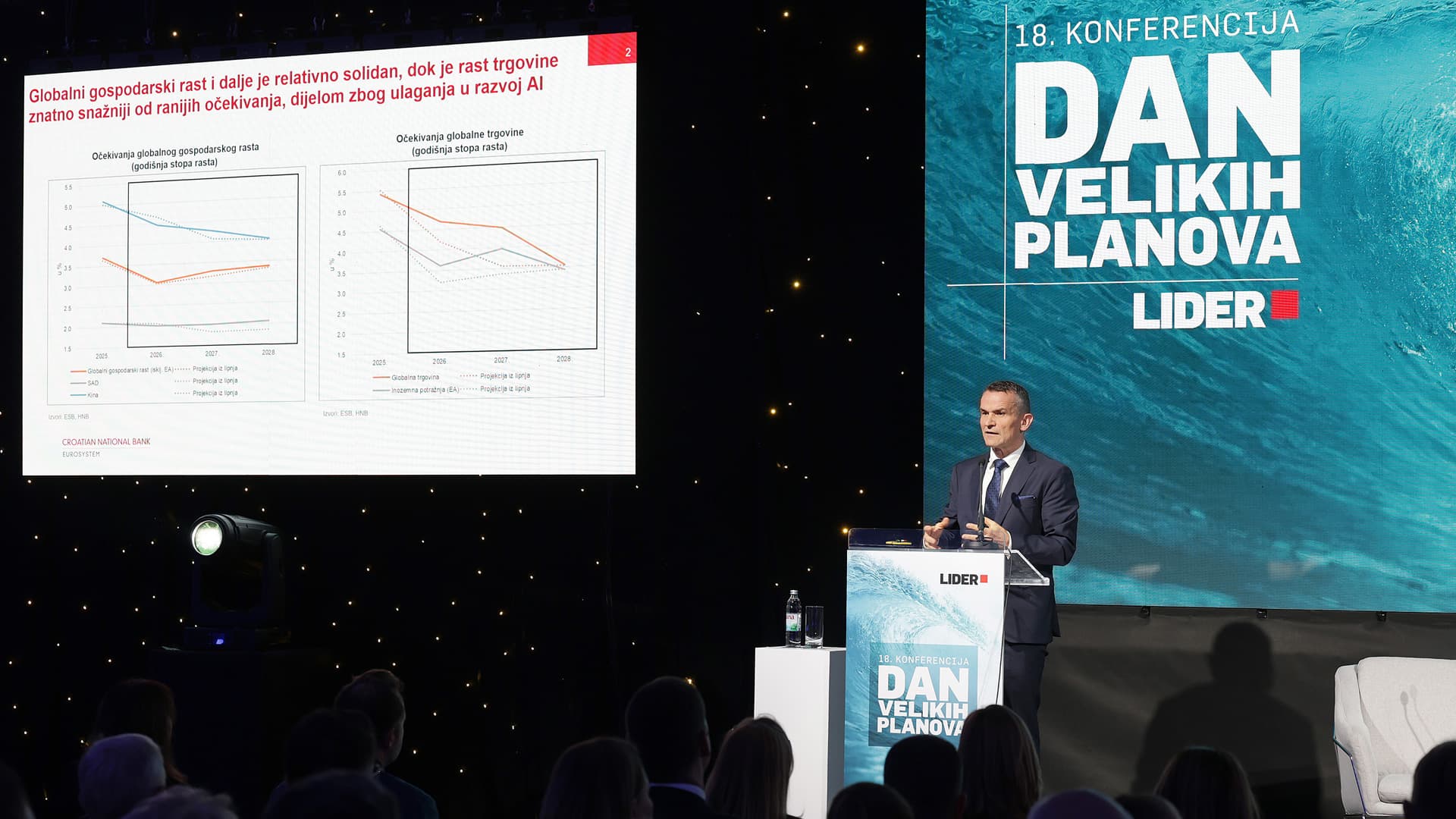
Economic outlook remains highly uncertain, dominated by risks of inflation exceeding projections and economic activity falling short of expectations. The risks to economic activity and inflation arise from exceptionally volatile energy prices so alternative macroeconomic scenarios reflect a wide range of possible developments in growth and inflation pursuant to different assumptions about the intensity and the duration of the energy shock and its indirect and second-round effects. The risks of inflation exceeding projections are additionally exacerbated by unfavourable weather, as well as indirect and second-round effects being stronger than expected”, stressed Ante Žigman, the Governor of the Croatian National Bank in his opening speech Macroeconomic outlook and monetary policy at Lider’s traditional conference, Day of Great Plans held in Zagreb today.
He reminded that the ECB’s Governing Council raised key interest rates by 25 basis points in September, which is paired with continued gradual reduction of surplus liquidity. “Thus far, the transmission of monetary policy tightening to banks’ interest rates on new corporate and household loans has been relatively limited. However, more data are needed for a more comprehensive assessment of the effects of transmission. Loans to corporates and households grew relatively strongly in the seven months of 2026, although they slowed down on an annual level. Owing to continued growth of cyclical risks also associated with the strong growth of loans we have additionally tightened macroeconomic policy measures with an aim to preserve the financial stability of the financial system and protect consumers. By lowering the limits on consumer lending criteria, we have additionally mitigated the risks associated with rising household borrowing”, concluded the Governor.