
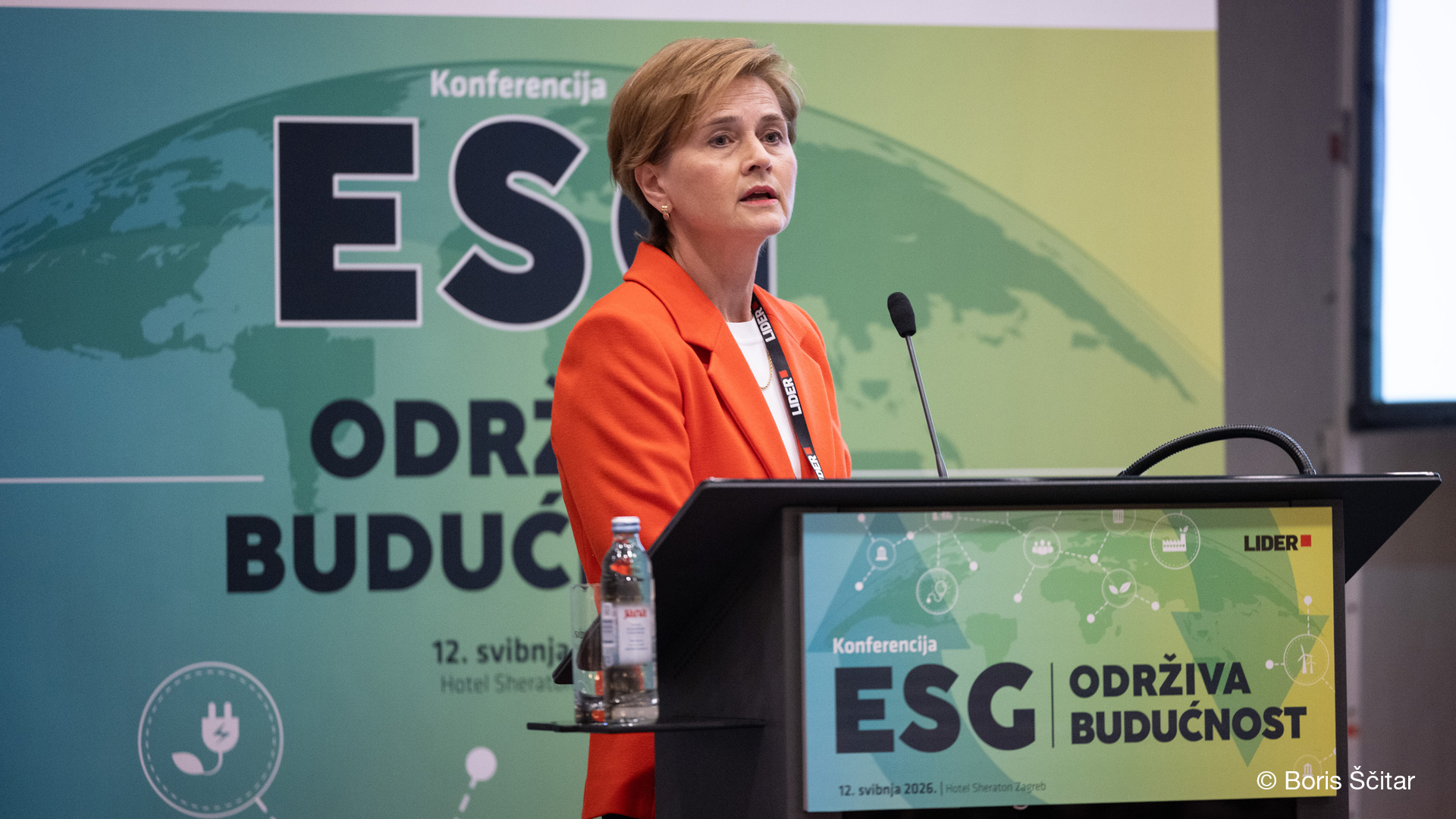
"Climate change causes structural changes in the economy and leads to significant financial risks, both physical and transitional. Therefore, central banks and financial system regulators need to ensure the resilience of the financial system against these risks in order to achieve their legal objectives and tasks. Since its inception, the Network for Greening the Financial System (NGFS) has worked to improve the resilience of the financial system to climate and environmental risks, and has encouraged the strengthening of the financial flows needed to support the transition to a sustainable economy. The mission of the NGFS is to enhance the ability of the financial system to manage climate and environmental risks and to mobilise financial resources to support the transition to a sustainable economy. In order to fulfil this mission, members of the NGFS share experiences, exchange best practices and conduct or commission analyses on green finances", said Sandra Švaljek, Deputy Governor of the Croatian National Bank in the opening speech for the panel "NGFS - Why is it important in the ESG context?" at the conference "ESG - Sustainable Future", organized today by Lider media d.o.o.
The Deputy Governor stressed that, since its establishment, the NGFS had focused on the implementation and operationalisation of central bank and supervisory activities in support of the transition to a net-zero economy. “It has made the greatest strides in improving scenarios and encouraging the use of climate scenarios in analyses, projections and climate stress tests of financial institutions, creating a solid basis for integrating climate change into the monetary policy strategy and framework, contributing to shaping the prudential approach to financial institutions' transition plans, systematically integrating climate into all business functions of central banks, and strengthening members' capacity for climate action. The NGFS creates 'public goods' by facilitating climate activities for members and the wider community. Unlike in the early years, central banks and regulators are now forward-looking in terms of climate transition, for example through transition plans and the use of calculated scenarios. The work of the NGFS encourages their members to activity, because most members apply the best practice that they share with each other within the NGFS when taking concrete steps and shaping policies. This has also improved the practices of financial institutions around the world", said Sandra Švaljek, adding that the NGFS is working on practical guides in which it builds on existing practices and promotes mutual exchange of knowledge.